• Overview
  • Personal Work
  • Commissions
  • Portfolios
    • Portrait
    • Travel
    • Food
    • Spaces
  • Info
  • Journal
  • Menu

Andrew Faulk

Photographing the people and traditions that reveal the deeper character of place. Tokyo-based editorial and commercial photographer specializing in travel, hospitality, and human-centered storytelling throughout Japan and beyond.
  • Overview
  • Personal Work
  • Commissions
  • Portfolios
    • Portrait
    • Travel
    • Food
    • Spaces
  • Info
  • Journal
Nai Harn beach at sunset in Phuket, Thailand

Phuket | Thailand Travel Photography

March 09, 2025 in Tokyo Photographer

As a travel photographer, Phuket, Thailand, has a way of drawing me in with its endless opportunities for capturing the essence of a place. The island blends natural beauty, vibrant culture, and stunning landscapes in a way that feels almost tailor-made for a photographer. It doesn’t matter if I’m just starting my day with the quiet stillness of a beach sunrise or ending it amidst the lively buzz of a night market—there’s always something to photograph, something that speaks to the soul of Southeast Asia.

The energetic diversity in Phuket is incredible. I’ll often find myself bouncing between moments of tranquility and exhilaration. The beaches at dawn, bathed in soft golden light, feel like a world apart—serene and still. In contrast, the markets are a whirlwind of color and motion, alive with the hum of motorbikes and the vibrant displays of fruit, spices, and handcrafted goods. Each scene offers something unique to capture, a new perspective on the pulse of life here.

What I appreciate most is how Phuket never feels one-dimensional. The temples, with their quiet, intricate beauty, offer a peaceful respite from the busy streets. The way the light shifts inside these sacred spaces—soft and shadowed—always provides an opportunity to reflect the island’s spiritual depth. In those moments, it’s easy to lose track of time, just letting the atmosphere guide the shot.

Beyond the beaches, there’s a wildness in Phuket’s landscapes that speaks to a different side of the island. The jungles, thick with greenery, the dramatic cliffs that seem to drop straight into the ocean—there’s a raw beauty here that’s hard to ignore. Sometimes, it’s the simple things that stand out: the silhouette of a palm tree swaying in the wind, or sunlight filtering through the jungle canopy, casting dappled shadows on the ground. These are the moments that remind me of how much the island has to offer if I just slow down and pay attention.

Light in Phuket is a constant companion, shifting through the day and giving each moment its own character. The soft light at sunrise and sunset is perfect for capturing the sweeping vistas and quiet landscapes. But the island’s energy doesn’t stop there—the neon glow of the nightlife and the vibrant atmosphere of the beaches add another layer of color and life to photos. Each shift in light brings with it a new way to see the island.

Phuket invites me to explore, to experiment, and to find new ways to tell its story through my lens. In every corner of this island, I feel like I’m capturing a piece of Thailand. It’s a place that inspires me to keep discovering, to keep creating.

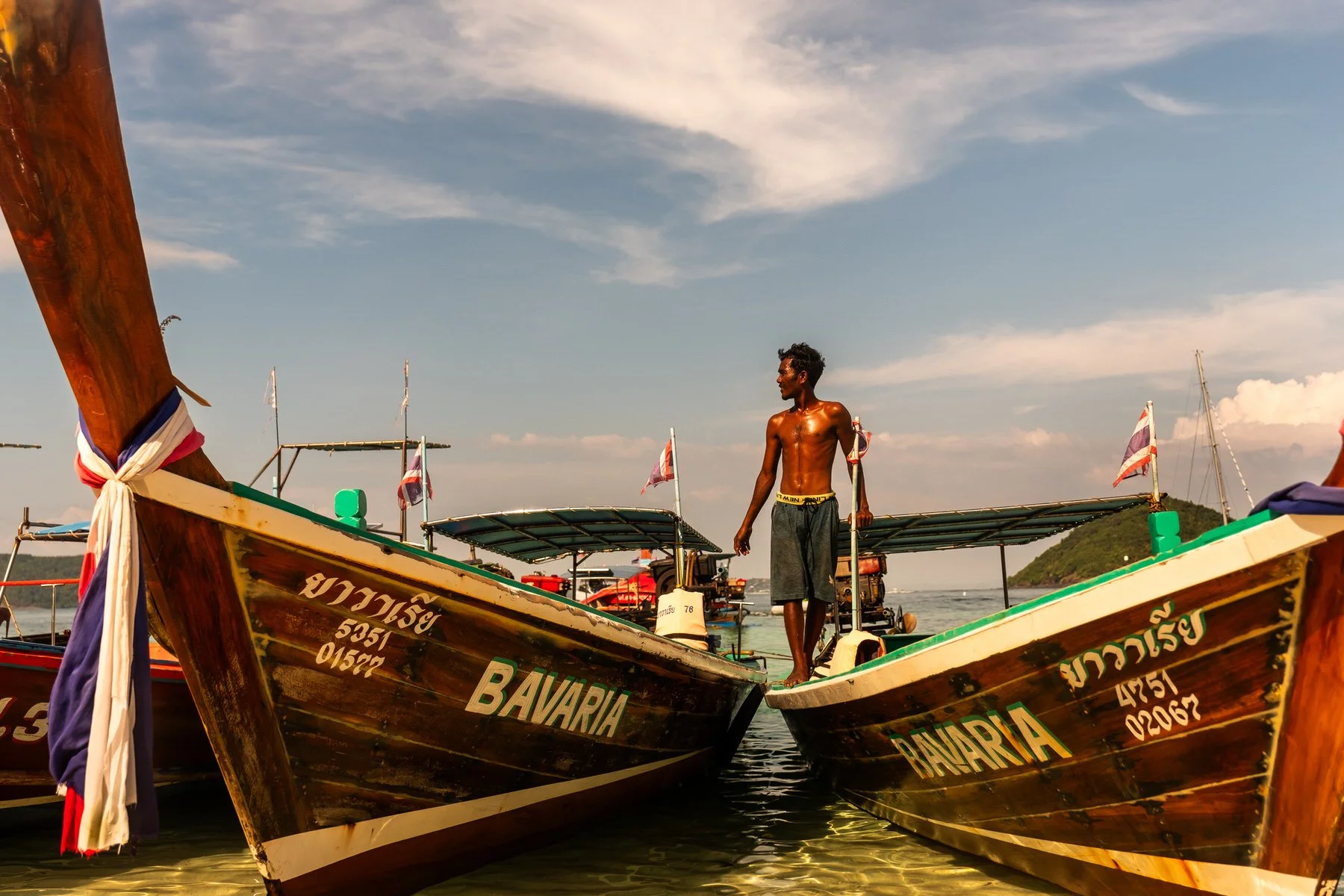
Boatman in Phuket, Thailand
Elderly Thai lady in Phuket, Thailand
Goot on edge of boat in Phuket, Thailand
Abstract of Nai Harn beach at sunset in Phuket, Thailand
Green roofs in Phuket, Thailand
Beach sunset in Phuket, Thailand
Old man smoking a cigarette in Phuket, Thailand
Phuket, Thailand money exchange
Palm tree at dusk in Phuket, Thailand
Shadows on wall
Man stands on boat in Banana Beach in Phuket, Thailand
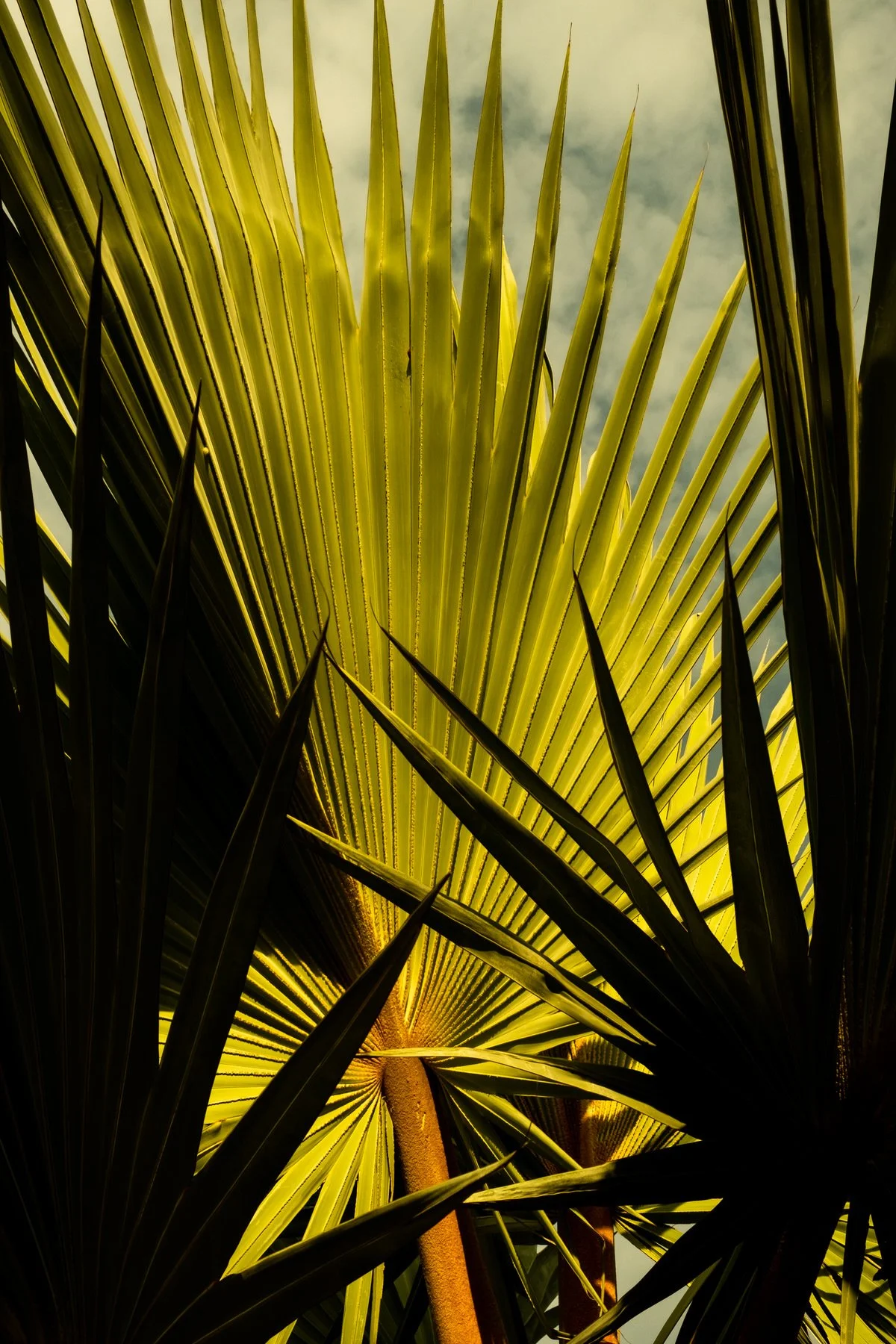
Giant fronds in Phuket, Thailand
Small boat on beach in Phuket, Thailand.
Blue water at Racha Yai, Thailand
Palms seen through a wall in Phuket.
Silhouetted island in Phuket, Thailand.
Silhouette of palm trees against sunset in Phuket, Thailand.
Yellow wall in garage
Boat off the shore of Racha Yai, Thailand

More Travel Photography

Couple sitting in Kyoto Zen Garden

Kyoto’s Zen Gardens | Japan Travel Photographer

Girl in kimono in autumn in Yamaguchi, Japan

52 Places Yamaguchi

Boat riders near sakura tree in Tokyo, Japan

36 Hours In Tokyo, Japan

Tags: Thailand, asia
Comment
Communal table at Farmoon in Kyoto, Japan

Farmoon | Kyoto's Best Farm-To-Table Restaurant

February 02, 2025 in Food & Beverage

Traveling from Tokyo to Kyoto was not just another journey for me; it was a purposeful mission to photograph the exquisite offerings at Farmoon for a piece in Virtuoso, The Magazine that highlights Kyoto's organic farming initiatives. As I approached this culinary gem, nestled within a beautifully converted machiya, I felt an exciting anticipation. The bustling energy of Tokyo faded away, replaced by the serene charm that Kyoto exudes.

Upon entering Farmoon, I was greeted by the inviting aroma of fresh ingredients and the gentle hum of conversation. Chef Masayo Funakoshi was at work, her passion evident in every dish she prepared. Each meal at Farmoon is a reflection of her artistry—an innovative blend of Western and traditional Japanese flavors. As Funakoshi and her staff plated each offering on handmade ceramic tableware, I could see how the commitment to organic farming shine.

As a food photographer in Japan, it was essential for me to capture not only the beauty of the dishes but also the story behind them. I aimed to highlight how Farmoon's menu is deeply connected to the organic farming initiatives taking root in the region. The sunlight streamed through the windows, casting a warm glow over the plates, which allowed me to explore different angles and compositions that would convey the warmth and creativity of the dining experience.

The circular communal table at Farmoon fostered a sense of togetherness. With each click of the shutter, I sought to illustrate the rich narrative of sustainable dining and the dedication of local farmers who contribute to this culinary ecosystem. My goal was to showcase how food photography goes beyond aesthetics; it captures the heart and soul of culinary experiences tied to organic practices. The dishes at Farmoon are not just delicious; they tell a story of community, care, and the rich agricultural heritage of the region.

If you’re looking for captivating food photography that tells a compelling story—whether for a magazine feature or your own culinary project—consider how professional imagery can elevate your brand. It’s about making connections, celebrating culture, and sharing creativity through the lens.

Chef Masayo Funakoshi at Farmoon in Kyoto, Japan
Organic food at Farmoon in Kyoto, Japan
Farmoon Kyoto meal prep
Farmoon Kyoto fresh vegetable prep
Interior details at Farmoon in Kyoto, Japan
Farmoon Kyoto exterior signage
Meal Prep at Farmoon in Kyoto, Japan
organic meal prep at Farmoon in Kyoto, Japan
Farmoon Menu Board
Organic food on offer at Farmoon in Kyoto, Japan
Chef Masayo Funakoshi at Farmoon in Kyoto, Japan
Guest dines at lunch at Farmoon in Kyoto, Japan
Farmoon interior details
Chef Masayo Funakoshi inside Farmoon in Kyoto
Japanese zenmai being prepared at Farmoon

More Japan Food Photography

Food Photography Portfolio

Satsuma Spirit | Shingo Gokan & SG Tavern

Four Seasons Otemachi | Commercial F&B Photography

Tags: Japan, Editorial, Kyoto
Comment
Girl in kimono under autumn leaves in Yamaguchi, Japan

Japan Travel - Yamaguchi for The New York Times

February 01, 2025 in Travel Photography

Yamaguchi City doesn’t clamor for attention the way Tokyo or Osaka do—it speaks in quieter tones. When The New York Times assigned me to photograph the city for the annual 52 Places list, I was thrilled. Unlike Japan’s more famous destinations, Yamaguchi isn’t known for dazzling sights or major tourist draws and that’s why I love it. Its charm lies in the details—the kind you only notice when you slow down.

As a travel photographer in Japan, I’m used to chasing extremes—bright cityscapes or sweeping rural vistas. But Yamaguchi demands something different. It doesn’t overwhelm; it unfolds. Yamaguchji’s beauty isn’t in spectacle but in subtlety, in the way history and daily life quietly coexist.

I felt this rhythm as I moved through the city. The winding paths to Ruriko-ji’s five-story pagoda lead through a landscape where nature and architecture blended. Traditional machiya homes sit alongside modern storefronts, not in stark contrast but in quiet harmony. Yamaguchi isn’t a place of bold juxtapositions—it’s a city of smooth transitions, where nothing feels out of place.

Photographing Yamaguchi required patience. Light and shadow told the story as much as the landmarks themselves—afternoon light filtered through blazing red maples, a temple floor glowed in the evening sun. More than capturing locations, I wanted to photograph the feeling of being there, the unhurried stillness that sets Yamaguchi apart.

Unlike Japan’s more touristy spots, Yamaguchi hasn’t been polished for visitors. It remains itself: a city of everyday moments. Cyclists ride along quiet streets, shopkeepers prepare for the day, temple bells chime in the distance. It doesn’t try to impress, but if you take the time to look, it leaves a lasting impression.

Yamaguchi isn’t necessarily a photographer’s dream in the typical sense. It’s not grandiose, filled with dramatic scenes. Yamaguchi is, however, a contemplative city, where the small moments of history, culture, and nature play together—the kind of beauty you don’t just see but feel. This fact made my time in Yamaguchi an opportunity for me to slow down, reflect on my process instead of just a product, and to enjoy aspects of the job that time doesn’t usually afford.


I was honored to see my videography featured by New York Times Travel editor Stephen Hiltner, who spoke about why Yamaguchi made this year’s 52 Places to Go list. Check out the short clip about why Yamaguchi was selected for the prestigious list and then read the full 52 Places To Go in 2024.


Red maple leaves in Yamaguchi, Japan
detail of Japanese kimono
Joeiji temple exterior in Yamaguchi, Japan
yellow maple fall foliage in Yamaguchi, Japan
incense offering in Yamaguchi, Japan
Rurikoji temple buddha feet
Joeiji temple in Yamaguchi, Japan
Yamaguchi zen garden
Temple exterior in Yamaguchi
fallen ginkgo leaves
Sesshu garden in Yamaguchi, Japan
Rurikoji temple buddha statue in Yamaguchi, Japan
Rurikoji temple graves in Yamaguchi, Japan
Yamaguchi, Japan pagoda wrapped

More Travel Photography

Kyoto, Japan as seen from Kiyomizudera temple

Kyoto Wants You Back

Saturday market in Lalibela, Ethiopia

Travel Photography Portfolio

Tags: japan, New York Times, Yamaguchi
Comment
Shingo Gokan making a matcha cocktail at SG Tavern

Shingo Gokan & SG Tavern | Tokyo Editorial Photographer

January 05, 2025 in Editorial Photography, Brand Narrative

In April 1865, 19 young samurai from the Satsuma Domain—now Kagoshima Prefecture—embarked on a covert mission to London. At a time when Japan was isolated under the Sakoku policy, overseas travel was forbidden. Yet, these samurai, now known as the Satsuma Students, defied the ban with a singular goal: to absorb the Western knowledge reshaping the world. They would return, carrying with them the tools to spark Japan’s modernization, laying the foundation for a transformative revolution.

I couldn’t help but think of these samurai as I sat with Shingo Gokan at his newly opened SG Tavern. Like the Satsuma Students, Gokan is a bridge between worlds, combining a quiet determination with a passion for exploration and innovation. His journey, too, has involved defying convention and venturing into the unknown in pursuit of something greater.

Gokan’s career began at 18, a formative age to jump behind the bar. Soon after, he set his sights beyond Japan’s borders, traveling to Spain and then New York in 2006 to refine his craft. His breakthrough came in 2012 when he won the Bacardi Legacy Cocktail Competition, cementing his reputation on the global stage and leading to extensive travels across Europe and Asia, deepening his understanding of bartending cultures worldwide.

In 2014, after more than a decade of honing his skills, Gokan opened his first venture in Shanghai—Speak Low, inspired by Prohibition-era speakeasies. The bar was an immediate success, celebrated not just for its concept but for its immersive experience. By 2017, with multiple brands operating in Shanghai and accolades such as International Bartender of the Year at the Tales of the Cocktail Foundation’s Spirited Awards, Gokan had become a cultural force in the industry—a true Culturalpreneur, blending the artistry of mixology with a deep respect for tradition and an unflinching desire to innovate. Ready for his next challenge, he returned to Japan, where his international experiences positioned him not only as a respected professional but also as one of the industry’s leading figures.

While researching his SG Shochu brand in Kagoshima, Gokan became captivated by the Satsuma Students’ story. Inspired, he wondered: what if he could create a space where time-honored traditions and innovative ideas could coexist? This question led to the creation of SG Tavern—a place where culture, history, and creativity converge.

“For Japanese people, the highball means whisky and soda. But for Westerners, it’s more of a style,” Gokan explains. “I wanted to introduce a new take on the highball to Japanese consumers, while also bringing our Japanese spirits to the global market.” To do this, Gokan crafted SG Tavern’s Highball Journey, a menu that follows the Satsuma’s voyage. Take, for example, the Satsuma, a fresh take on the highball that combines Gokan’s own SG Shochu IMO (sweet potato shochu) with sencha green tea directly from Kagoshima.

The drink menu extends beyond the Highball Journey, showcasing a range of signature cocktails. A standout is the Pole Star Martini, a tribute to Seibei Nakagawa, a pivotal figure in the Satsuma Students' mission. This cocktail blends the smoothness of Grey Goose vodka with the tartness of seabuckthorn, accented by passionfruit and finished with a delicate splash of unfiltered beer. Another highlight is Gokan’s menu favorite, the Matcha Sazerac. “Matcha, kinako (soybean flour), and mugwort are common in Japanese sweets, but they’re rare in cocktails,” he explains. For Gokan, these drinks are a tribute to the samurai’s enduring influence on Gokan’s approach to bartending and offer a taste of the world the students themselves sought to understand.

The experience at SG Tavern extends beyond the drinks. In collaboration with Michelin-starred chef Yoshihiro Narisawa, Gokan has curated a menu that merges Japanese culinary traditions with global influences. Narisawa, known for his creative reinterpretations of Japanese ingredients, designed dishes that complement Gokan’s cocktails while adding their own chapter to the Satsuma Students’ story.

For Gokan, SG Tavern is more than just a place to eat and drink—it is a living story that invites guests to reflect on how cultural boundaries are remade, much like the Satsuma Students did when they set out to transform Japan’s future. As SG Tavern continues to evolve, it showcases the possibilities that emerge when history and creativity come together. “We have a lot of space for ‘What ifs.’ Our tavern is based on history, but there’s room for creativity in the gaps of the story,” Gokan says. “We research history, but we also create within it.” The tavern’s story is far from complete, and with each new chapter, the possibilities for deeper cultural connections and Gokan’s creative innovation continue to unfold.

Editorial profile was written and photographed for Travel + Leisure Asia (2025).


Related Posts

Four Seasons | Commercial Food & Beverage Photography

Food & Beverage Portfolio

Tokyo’s Rising Stars

Tags: Portrait, Food & Beverage
Comment
An array of dishes from Pigneto at the Four Seasons Otemachi

Four Seasons | Commercial Food Photographer in Japan

October 06, 2024 in Commercial Photography

The view from the Four Seasons Otemachi is hard to ignore. Sitting high above central Tokyo, the restaurant looks out across the city, with a perspective that makes even familiar landmarks feel new. It’s the kind of place where you can easily lose track of time staring out the window.

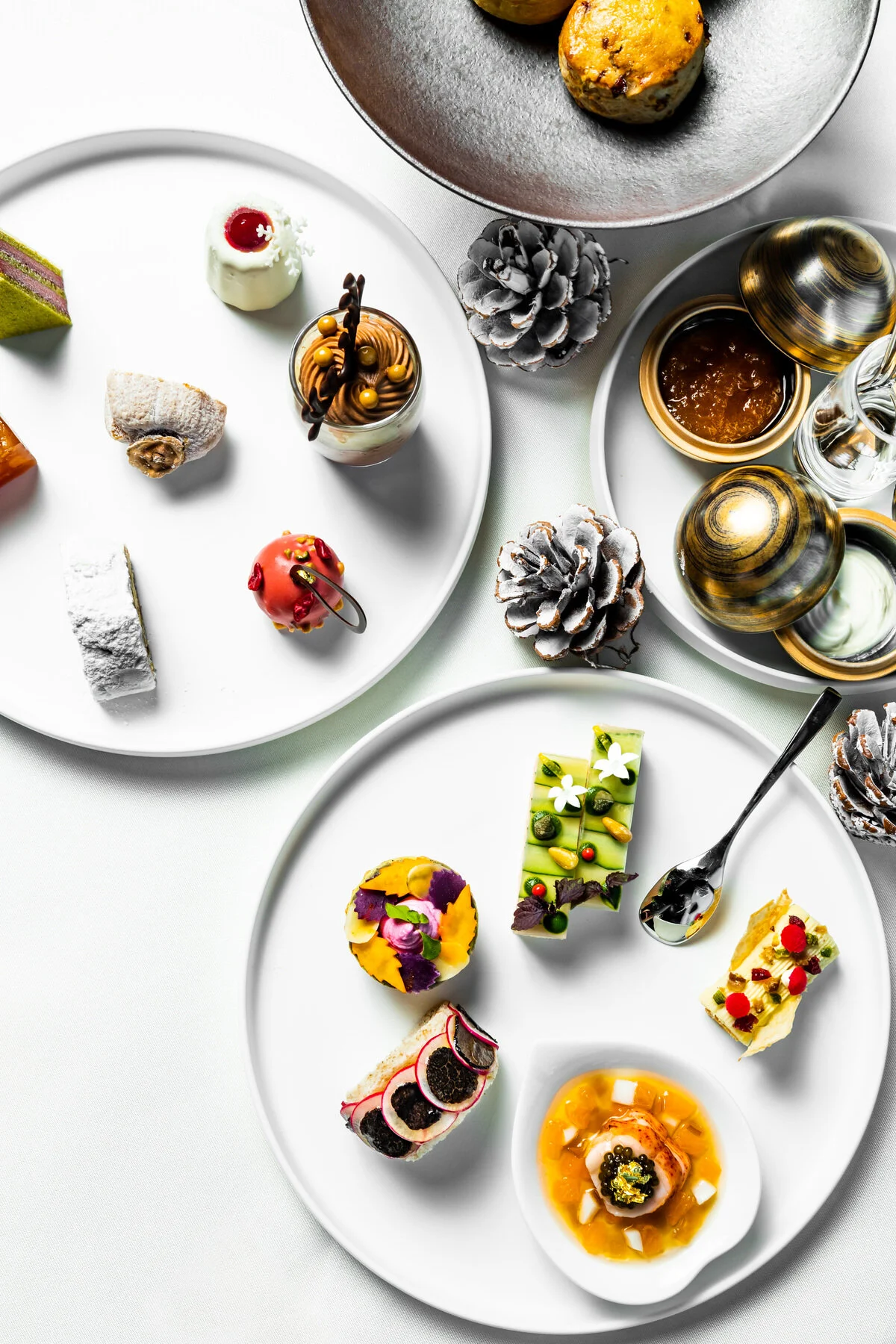
I was there to photograph a selection of dishes and cocktails from the hotel’s food and beverage program. The menu drew on seasonal ingredients and familiar international flavors, with each dish prepared and presented with a level of care that reflected the standards the Four Seasons is known for.

As a food photographer based in Tokyo, I’m always interested in the details that make a dish unique. Some plates relied on bold colors and textures, while others took a more restrained approach. My job was simply to translate those choices into photographs that felt as inviting as the food itself.

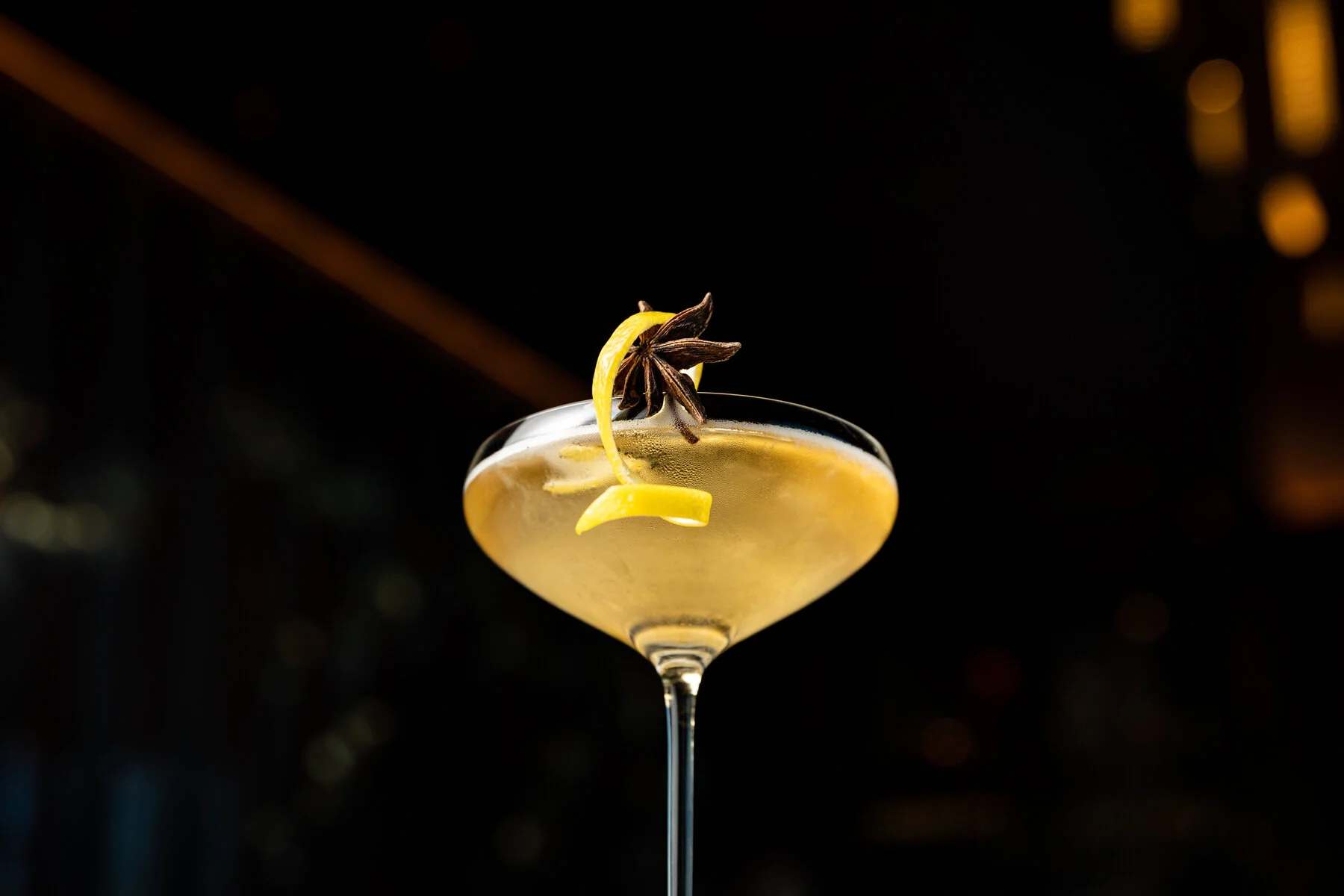
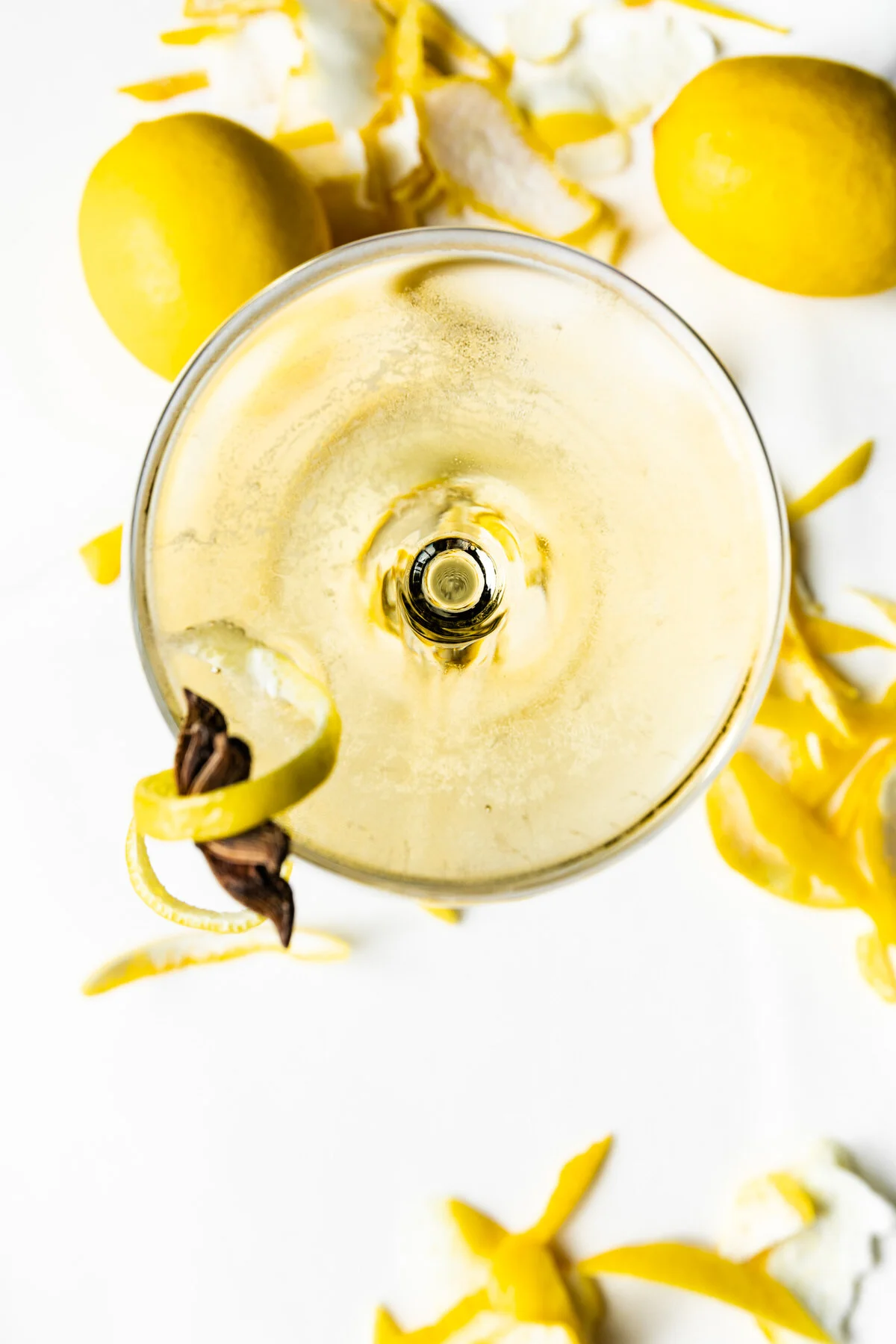
Alongside the dishes, I also photographed a range of signature cocktails. Each drink had its own personality, from bright and playful to understated and elegant. The challenge was finding ways to highlight both the craftsmanship behind the drinks and the atmosphere of the space they were served in.

What stood out most throughout the day was the consistency. Every plate, every cocktail, and every detail of the dining experience felt carefully considered. The kitchen and bar teams clearly shared the same goal: creating an experience that matched the setting.

By the end of the shoot, I had spent hours surrounded by great food, impressive views, and a team that cared deeply about what they were creating. Assignments like this are a reminder that successful hospitality photography is about more than documenting what's on the table—it's about capturing the experience that surrounds it.

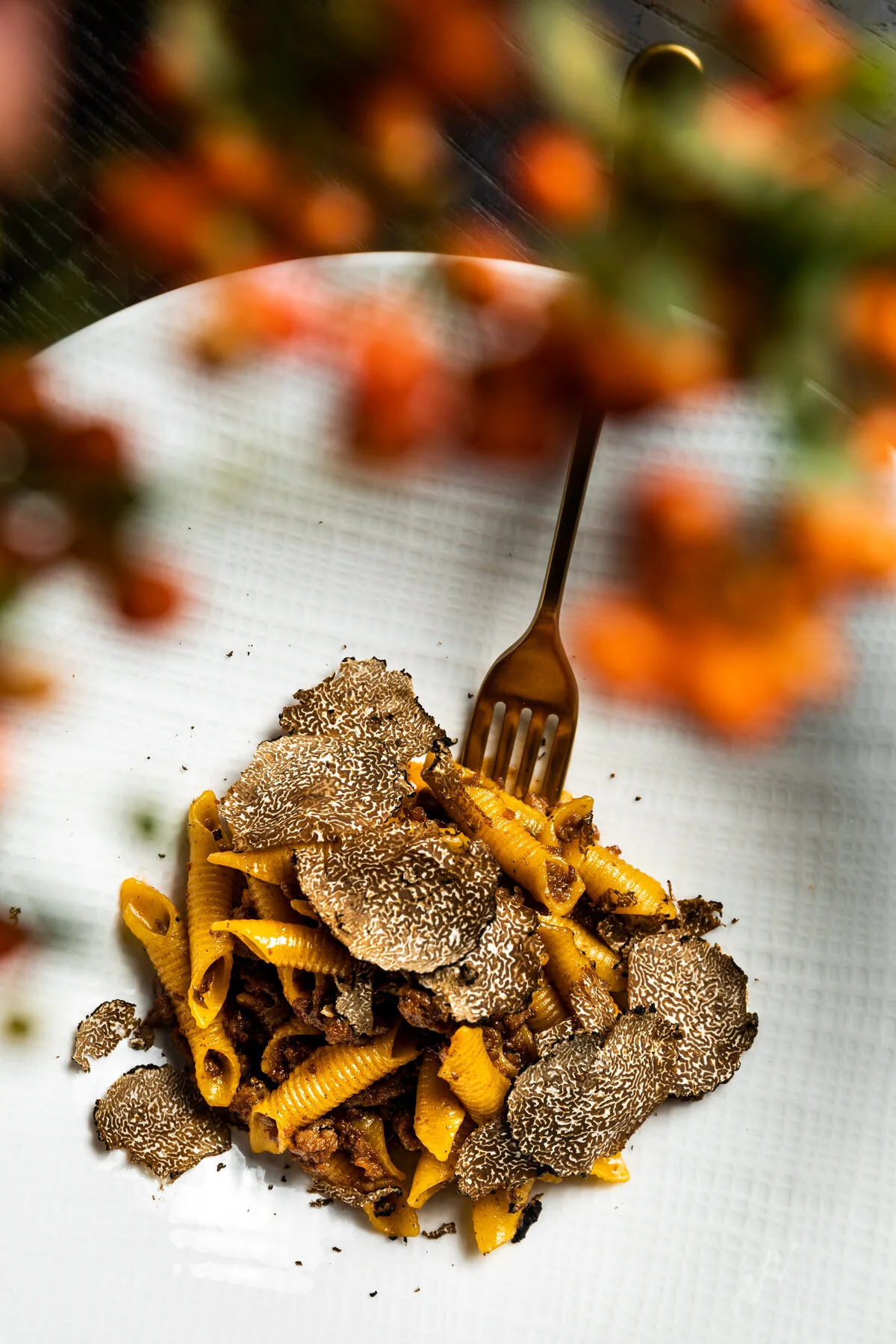
Pasta dish at the Four Seasons Otemachi in Tokyo, Japan
Chocolate dessert plated on a white dish
Steak plate at the Four Seasons Otemachi
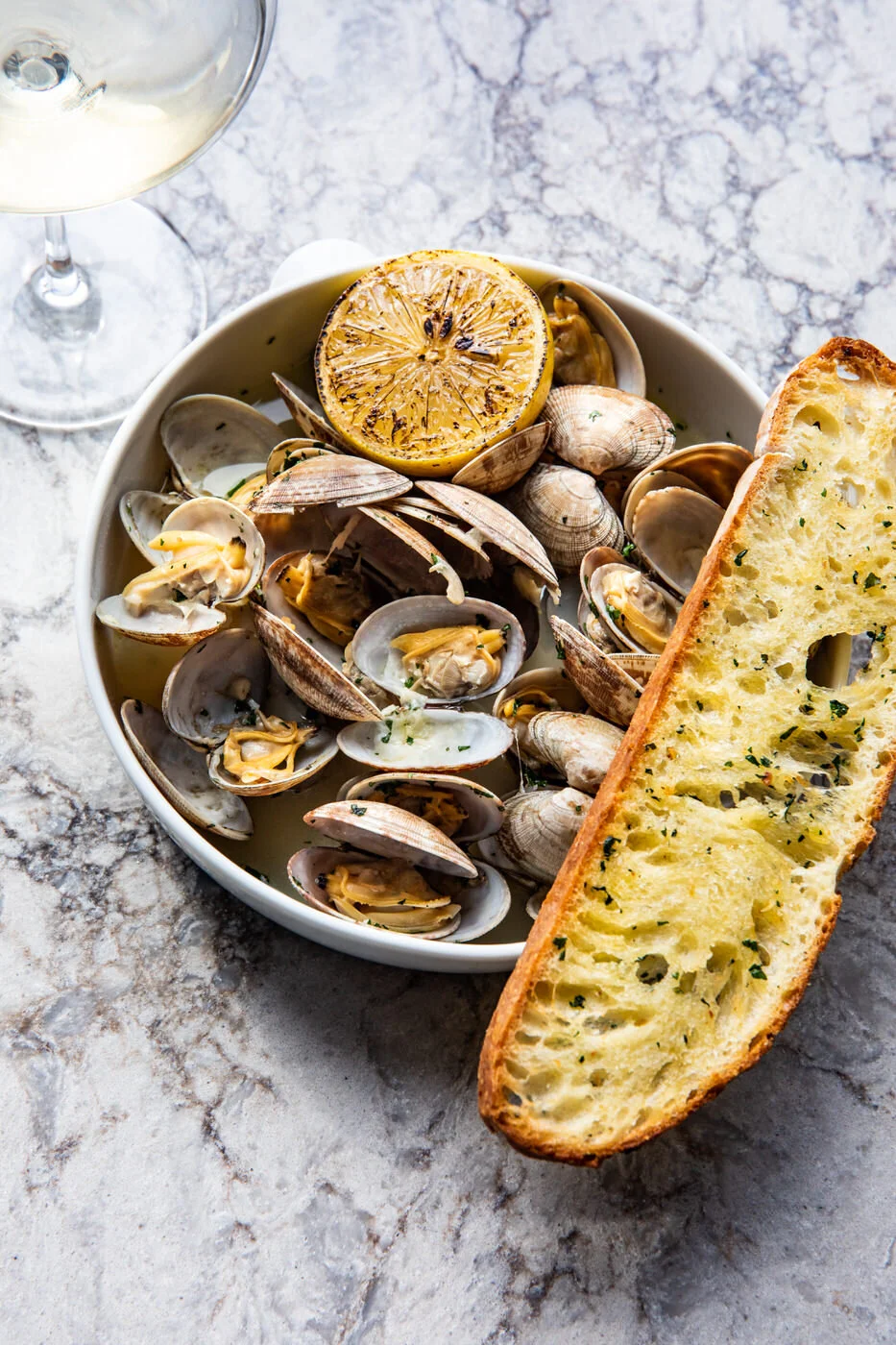
Mussels and bread with a glass of white wine
Seasonal cocktail with a lemon twist
Seasonal desserts on offer at the Four Seasons Otemachi
Dark cocktail with a carved piece of ice served at the Four Seasons Otemachi
Cocktail with a lemon twist at the Four Seasons Otemachi
Mushroom risotto at the Four Seaons Otemachi

Contact me directly to start a conversation about your food photography project in Tokyo or beyond.


More Food Photography

Portrait of head chef at Sonoji in Tokyo, Japan

Tokyo’s Rising Chef Stars For Skylife Magazine

Itosho's Shojin Ryori | Editorial Photography

Itosho's Shojin Ryori | Editorial Photography

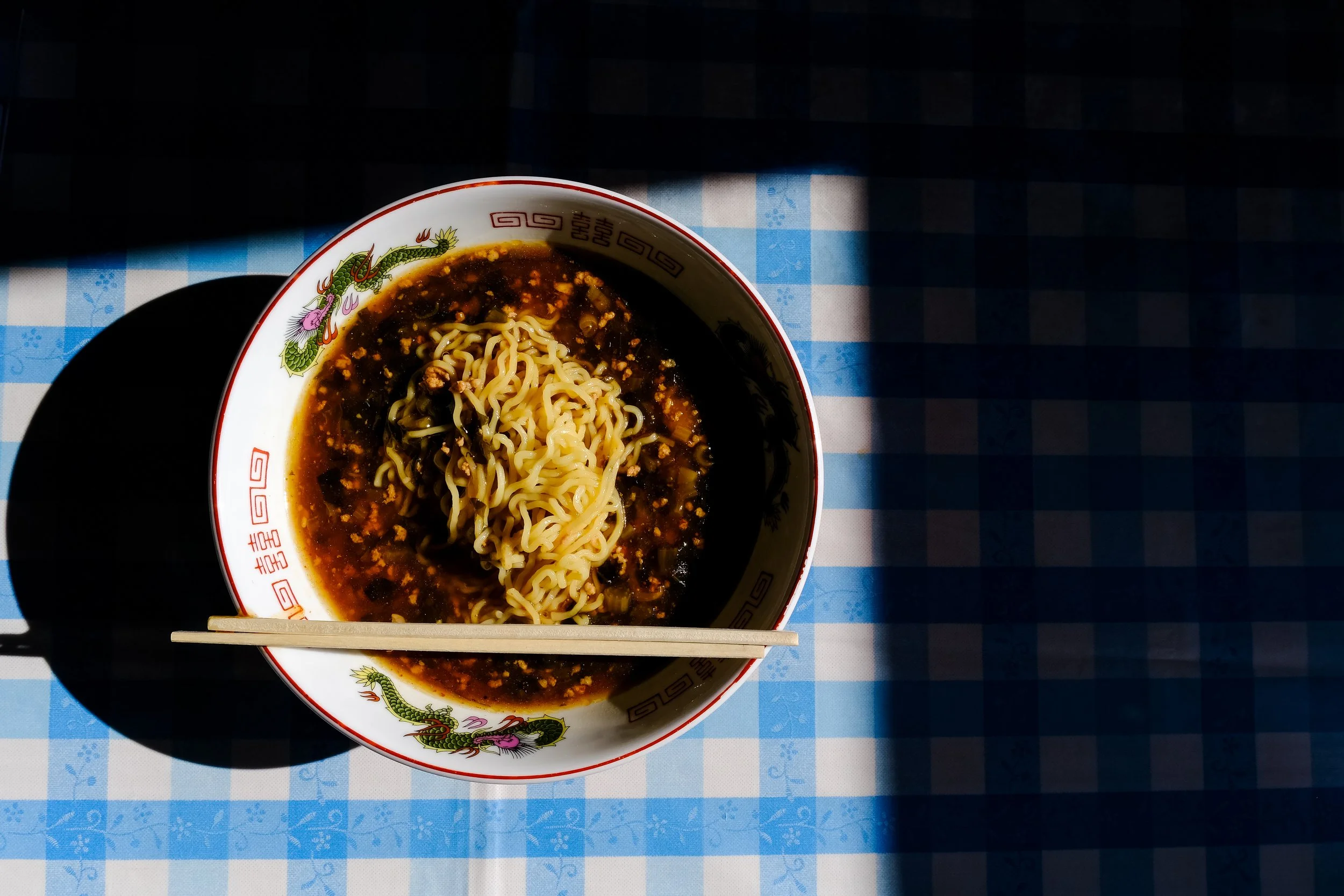
Tan tan men with chopsticks at Mitsui Shokudo

Food Photography Portfolio - Tokyo Photographer

Tags: Food, Hotel
Comment
Prev / Next

Andrew Faulk

Andrew Faulk is a Tokyo-based editorial, travel, and commercial photographer working throughout Japan, Asia, and beyond. Drawn to the people who shape a place's character, his work explores the intersection of culture, travel, food, and hospitality. Andrew is available for editorial and commercial photography assignments worldwide. He is a father, husband, educator, heavy metal enthusiast, and makes the best mashed potatoes in the world.

No results found