I have spent a lot of time with Dylan Goldby. We travel together, teach together, and, more often than not, just sit around and make fun of each other. Goldby is a complex person, but spending time with him seems so simple. Throughout our decade-long friendship, I have learned just as much about the importance of comfortable silences, how to appropriately time crass humor, and how to remain calm during a gout attack as I have about what it takes to be a professional photographer. Above all, Dylan has taught me what it means to be humble.
Dylan is one of those photographers who never really promotes his work. He is not the kind of photographer who toots his trumpet to his peers. He isn’t compelled to inundate his followers with blatant calls to action or daily promotional posts. He is the antithesis of the “sage on the stage.”
Ask Dylan Goldby what he has been up to lately and you will likely receive a short answer, “Ya know, nothing much.” However, Dylan’s definition of “nothing much” is quite skewed. His quiet, deflecting retort actually means that he has been busy capturing the disappearing professions in Asia (such as the blacksmiths and woodworkers of Vietnam), writing for pro-level blogs such as FStoppers, photographing private and corporate clients in Korea, publishing e-books on off-camera flash techniques, and spending months on the road documenting the dying tradition of facial tattooing in Asia.
Nothing much… right? Dylan is just too humble to talk about the deep work that he is doing as a professional photographer.
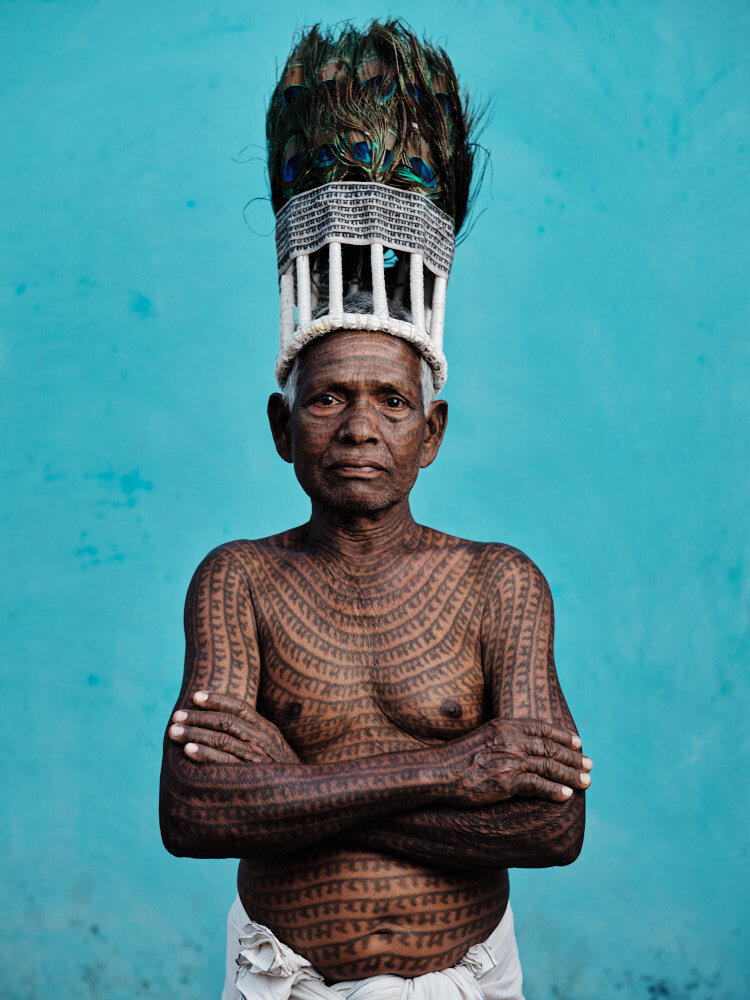
While Goldby was somewhat reluctant to talk about his work, I pressed him for an interview. I wanted to know more about “nothing much.” I wanted to hear firsthand about Dylan’s craft and how he has become the best photographer you’ve likely never heard of. Specifically, I wanted to know more about Goldby’s Tattoos of Asia (TOA) project, one of the most culturally significant documentary photography projects currently in production.

WHO IS DYLAN GOLDBY?
Describe yourself as a photographer in five sentences or less. Go…
I’m a full-time photographer in Seoul, South Korea. I mostly work with families, especially the adoptive community. However, there’s a sprinkling of travel editorial, corporate events, and couples photography in there as well. In my “time off,” I’ve been working on a personal project, Tattoos of Asia, for several years.
You grew up in Australia. Do you feel that those formative years influenced you as a photographer?
I’m not sure Australia had a direct influence on who I am and what I do aside from making me want to see a broader swatch of the world. Growing up in a small town meant books and escapism to me.
My mother always worked hard to ensure we had as many varied experiences as possible while we were growing up. We hosted our school’s Japanese exchange teacher for the sake of learning about another place, were invited to watch my mother fit shoes after school, worked with my Nanna in the Salvation Army basement preparing food packages for the underprivileged, watched drag race meets from the front row, rode motorcycles, played sport, camped in the forest, cooked our own food, whatever it took to get us interested in a variety of things.
When it came to learning, we were never told “no.” I guess that might be where my curiosity about how others live came from. There’s more to dig here… but I think that would require a book.
Why photography? Why do you pick up the camera? What is it about the medium that resonates with you?
I honestly don’t know what else I’d do. I love the process of creating images and being able to document the world as I see it. It drives me to explore the world, to learn, to go out when I really can’t be bothered, to meet new people, and to look inward a little more.
How did you get to this point in your photography career? What were some of the major milestones along the journey?
I started photography, much like many, as a hobby to document my travels. Through that, I met a few people with larger aspirations than simply pointing a camera at what they saw. I began working with some of the local expat-run magazines here in Seoul. This gave me access to so many different subjects - from food to CEOs.
However, I would credit a bit part of my choice of direction and the value I place on photography to the very first adoptive family who contacted me. It was from photographing that session that I found what I really value in photography, the story, and began forging my path.
What was the magnet that pulled you to adoption photography?
When I got out of that first session, there were a thousand thoughts flowing through my mind. An adoption session is a rollercoaster of emotions that swings between the absolute joy of playing with a child to the heartbreak of separation. Processing those emotions as I looked over the images from that day, I realized that this type of photography had value beyond a record for the parents and work for my portfolio. The work had the potential to be a way for the child to look back and understand their own story.
What is your favorite subject/s to photograph? Why?
I love to photograph humans with stories to tell. My personal work has always leaned towards tribal culture, traditional culture, and the older parts of town. I love stories with a little grit and people who haven’t lived in the construct we’re expected to live in nowadays. I love what makes us unique, not what makes us the same. I have very little interest in the rapidly gentrifying world we live in. When it comes to my bread and butter, it’s always great to be out working, but my favorite sessions are documentary adoption sessions. Being able to create a record with meaning for these families is a real honor.

TATTOOS OF ASIA PROJECT
Years ago you started your personal project Tattoos of Asia. What were the origins of the concept? How did the idea move from ideation to action?
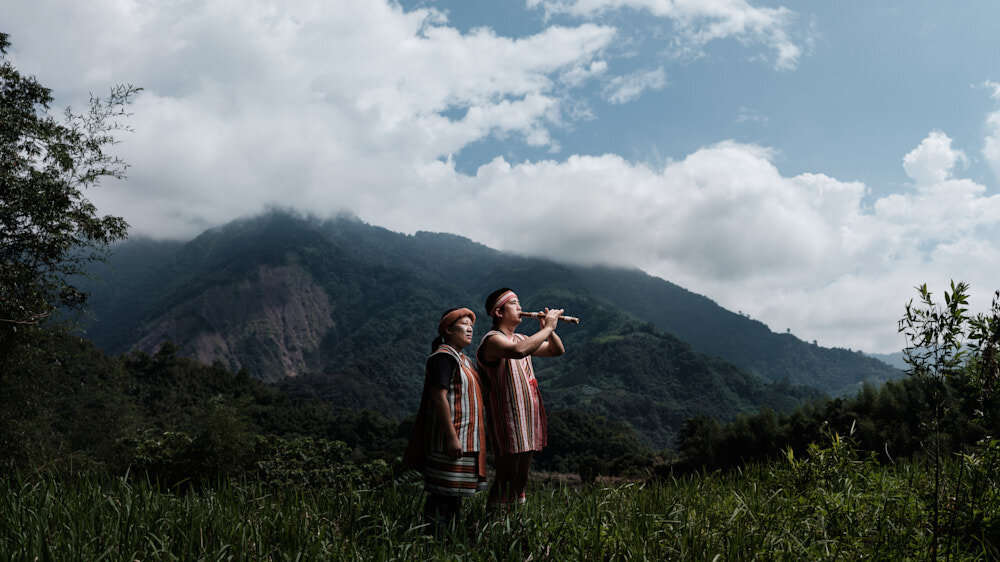
The project started with a three-week journey to visit the Lai Tu people in Rakhine State, Myanmar. The goal at that time was to put together a book of their amazing faces, but it quickly expanded into telling more about their culture.
Your first section of the project was on the Lai Tu Chin people in Myanmar. How did you decide to focus on this group of people?
It was 2015 and I was absolutely exhausted. It was my busiest year yet as a full-time photographer and I needed a break. My oh-so-forgiving wife let me take a couple of weeks to a destination of my choice and I chose Myanmar. The recently re-opened Mrauk U Township was chosen as I wanted to get away from it all. I had no idea what I’d find there and I didn’t do any research before going. I just needed out.
When I arrived, I met a bored tour guide one afternoon as I was wandering around the temple area of the town. It was off-season and he was just out appreciating the place he lived in. We got chatting and I asked him about the photos of tattooed women I’d seen in a couple of the restaurants around town. I ended up hiring him the next day to take me out to the villages they lived in and from there we decided to petition the local police to allow us out of the tourist zone to visit a few more. For the next couple of days, I spent my time with him and a couple of friendly police officers staying in villages and getting to know the locals.
When I got back home after this trip, I think it was only a few days before I’d convinced my wife I wanted to live there for a month and work on a personal project. It was from there that the project started to build in my head and a couple of friends decided to join me on the project.
What were your first experiences with the project?
From that first trip, I think the things that resonate with me most were the moments people opened up to us. It struck me again and again how forthcoming people were. Coming from the west, where everyone is so worried about privacy, personal space, and shielding themselves from others, it was wonderful to be welcomed into people’s homes and have them be so honest with us. Sipping tea and talking about your life with a stranger is something that is incomprehensible to many of us and yet we were welcomed every single time.
The difficulties also stand out in my mind. The villages we visited were some of the least developed in the whole of Myanmar and are only accessible by boat. A recent flood meant that the river was full of animal corpses in places and villages were just starting to get back on their feet. Getting sick was a constant worry and an occasional reality, but very quickly became a part of life. We ran out of water a couple of times, as well as villages, had run out after the floods. It was tough, but it was also the way the locals live every day in that area. We knew we’d be fine.


And then you got home… What post-production like after your time with the Lai Tu Chin people?
Post-production was intense. I’d never worked so long in the field without being able to see my images before. On previous trips, I’d always been gone for a short enough time that I usually took a laptop to work on and I could at least see what I’d photographed. But, on this trip, it was all hands on deck until I returned home with thousands of images that I hadn’t had a chance to review during the trip. Not only that, but I’d interviewed every one of the 100+ ladies I photographed so that all needed to be typed and collated ready for writing the book.
Then there was the book design. I worked on the book with my friend Pablo Fuentes Gómez for the design. There was a lot of back and forth to make sure the images would fit the design we’d discussed. For both of us, this was our first project of this magnitude, so it was very much a collaborative effort as we pulled all the materials together and found out what worked and didn’t.
After post-production, why did you decide to launch a Kickstarter campaign for the project?
I decided on Kickstarter because I knew I wanted to get this book into the world and have it begin doing what it was supposed to for the Lai Tu people. The combination of being able to fund the printing and get additional promotion for the book made Kickstarter the perfect avenue.
From there, I held a solo exhibition on the launch day of the Kickstarter in an attempt to spread the word about the project here in Seoul. The exhibition actually got us a good portion of the way towards our goal in one night. It was really great to feel the support from the community here in Korea.
How did you conclude that you were willing to move forward with a larger, more longitudinal project? With funding in place, were you ready to immediately ready to expand the project?
The book wasn’t even out when I started planning my next journey. It struck me that the Lai Tu couldn’t be the only people in Asia with facial tattoos. There had to be other cultures that had done something similar in the past. A few days of searching the Internet gave me a list of destinations and peoples. At the time, I don’t think I quite realized what I was getting myself into.
There’s never actually been any funding for this project. All proceeds from the Lai Tu project have been put into a fund for the villagers that will be used to help with education and drinking water - the two biggest issues they perceived as affecting their day to day lives. In terms of funding this project, I’ve been working as hard as I can while home in Korea and saving enough to make one trip happen at a time.
Why return the proceeds from the book to the Lai Tu community instead of using the funds to expand the project?
In the western world, it’s almost unthinkable that a person would knock on your door unannounced and request time with you for an interview and a portrait. In parts of Asia, this is simply not the case. People live with their doors open and welcome visitors as guests at any time. This was certainly my experience with the Lai Tu people and I wanted to repay their kindness in some sustainable way.



What does your pre-production work look like for a segment of the project?
There is a lot less information available about each of these groups of people than you might think. With groups like the Konyaks, their perceived barbarism in the west has fetishized them enough that people have taken an interest. There is a lot of misinformation spread because of this. Sifting through the misinformation is certainly part of the pre-production.
However, since a lot of what I’m after is personal anecdotes from my subjects, the best thing I can do to make that happen is to find a good guide. In these regions, the job of “fixer” simply doesn’t exist. So, finding a guide who I can communicate well with and who is willing to take on the larger job of facilitating this project is a must.
Tell us about your experience with fixers? To you, what makes a good fixer for a project like TOA?
This is perhaps the most taxing part of the whole process. Communication is key for a project like this and there isn’t anybody in any of these regions with experience in doing something like this. Most of their clients are tourists who want to see something exotic and use a guide to help them play out their fantasy of what a villager’s life must be like. It’s an easy trap to fall into and making sure that doesn’t happen means breaking your guide’s preconceived notions of what a visitor wants.
If you can get to that stage with your guide, you’re most of the way towards making the trip happen. My first day with a guide never involves going to meet subjects. It’s always a discussion day. We get to know each other, talk about the project, have a cup of tea, have a beer, and get a good night’s rest. I need someone who is willing to be a part of a team with goals in mind. Once that’s established, anything can be achieved.
Upon arrival on location, what are the personal and professional essentials needed before you can begin photographing?
That’s a big part of what I discuss with each of my guides. I try very hard to contribute to this by keeping my cameras in the bag and spending time with people before we get down to business. I try to ask them a bit about their houses, their day-to-day work, and their families. Once we’ve established a bit of rapport, I like to show them my work so they know why I’m here. I share some stories I’ve been told by others and let them know that I’d love to hear about them. Again, the guide/fixer is a huge part of this. Without them, I’m lost. I’ve had a couple of experiences with unmotivated guides and things just never work out.
Can you describe your headspace while photographing the subjects for TOA?
The actual photography for this project is a little bit like coloring by numbers. I have an overall goal of the things that I want to achieve and the images I want to get for the project. I know that I need the project’s trademark portrait on black for most of my subjects, but when I come across a particularly interesting person, piece of culture, or location, I’m always open to making more photographs. The goal of the additional imagery is to reinforce something that was said during my interview with the subject or something that will be required to pad out the book. I’m always trying to strike a balance between seeing where the rabbit-hole leads and getting what I need to put together the final book.
Is there a particular subject from TOA who clearly stands out to you?
I immediately think of Sahnai Wangsa. Of everyone I have interviewed to date, he was the frankest and candid when it came to his culture and brash with his words. I appreciated his time so much because he was so unapologetic. When asked about his tattoos, he told me of getting drunk with his friends so he could take the pain. He told me the story of his father's death that led to the events that earned him his tattoos.
When Sahnai had had enough, he told me he was done and needed a puff of his opium pipe. Whereas many tribes have lost the knowledge of why they have tattoos and many individuals are ashamed of the events of their past, Sahnai Wangsa owned his life and was frank with details.

Much of your work with TOA uses a still image to introduce a person. However much of the project is about detailing the story of that person. Why is it important to gather these stories instead of just focusing on stand-alone portraits?
Photographs, for me, are really only part of the story. There’s only so much an image can do and it’s far less than the oft-overused adage “A picture is worth a thousand words.” For me, learning about the person, something about their life specifically, is what really makes this project interesting. There are plenty of historians and academics out there who can give you a great overview of a people’s culture, but these studies, by nature, leave out the personal details. That’s what I’m after when it comes to these portraits.
Not all of the images in the project are of single subjects. You capture village life, rituals, environments, and details. Does your process change as you transition between individual subjects and wider work within a village or tribe?
It’s important to me to pad the project with images that are not just of tattoos. A portrait can never give you the full story of a person and a close-up of their tattoo much less so. For this reason, I do my best to document any elements of culture I come across during my travels.
Passing traders and greedy tourists have taken so much from people in these regions that there often isn’t much left and people are cautious about showing what they do have.
By spending time and establishing rapport with villagers, I am often given a privileged glimpse of some of these cultural relics and treat them with the respect they deserve. When it comes to things like ritual, you have to be careful that you’re not being performed for - this is often the case. Even if you are, it’s important to ask questions in order to understand the traditional aspects of the practice and make sure your photographs show those. It is these images, along with portraits, images of the landscapes, villages, and even simple things like a fireplace that brings more to the project than what the portraits alone can.
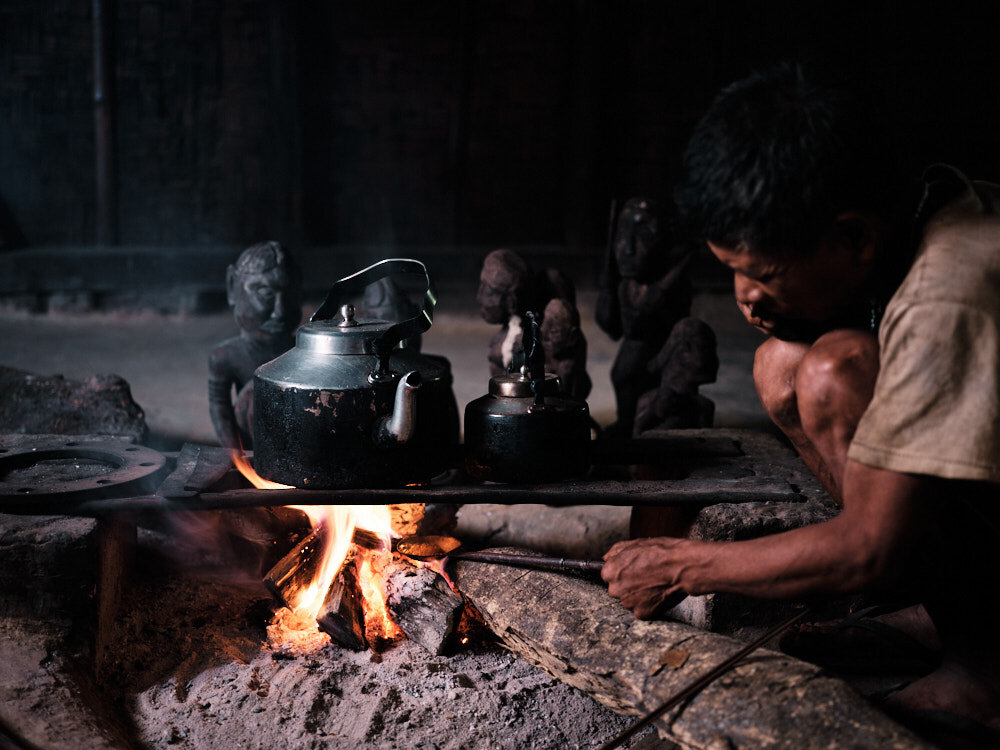


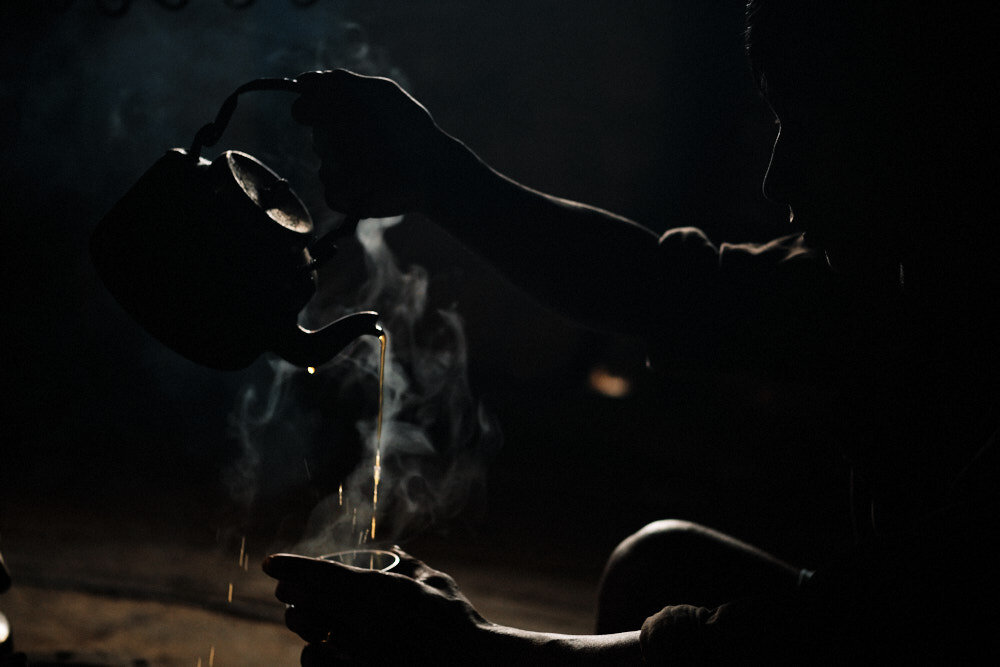
What have been some failures or hardships you have experienced working on TOA? How have you navigated the inevitable hiccups?
Honestly, I think everything that could go wrong has gone wrong. Success or failure isn’t dictated by these things, though. It’s all about how you deal with them. On the first trip I took, I had a camera fail in the extreme summer heat and a flash start pulsing on its own. We also had to hitch a ride along the river as we lost the screw from our boat. I’ve been sick more times than I can count and had freezing cold sleepless nights in the mountains. Flat tires, dead batteries, mud-filled shoes, bug bites by the hundreds, and running out of water have been frequent occurrences on these trips. But, when things go wrong, you just have to sit back and appreciate where you are, change the direction of what you're doing, and remember that although your pampered soul might not like elements of the situation you’re in, the people around you live like that every day and they’ve welcomed you into their lives.
At this point, you have worked on the project in India, Taiwan, Myanmar, and Laos. Are there any common threads that you have found between these tattooed people of Asia?
Many more than I thought I would, to be honest. With many of these peoples living in secluded valleys or in villages dotting mountaintops, I honestly had expected more disparate cultures. However, many of the beliefs between cultures have parallels and many of them have common stories to explain elements of their culture.


What have you learned about yourself while working on this project?
As a photographer, I’ve learned a lot about slowing down and making sure you get the shot you want. There’s no going back to many of these locations or visiting these people again. I’ve learned to trust my gut. I’m better at recognizing whether or not I truly care about a certain photograph or not now that the excitement of seeing something novel is over.
Personally, I’ve realized that I much prefer the simple countryside life over city life. Being able to focus on one thing and simplify life down to that has been a blessing for my mental well-being. Clean air and freshly grown local food are also a treat we miss out on in the city.
What’s next for Tattoos of Asia?
There’s just one more trip left and I will have achieved what I set out to do. This is a project that will never fully be done and I would love to revisit some of the peoples I have spent time with and there are a couple of other peoples with facial tattoos that I would like to include if time and funding can be found. But, you have to draw a line somewhere, right?
Once that trip is done, the process of writing and designing the final book will begin. I’m hoping to have everything ready to go for a 2022 release. When that time comes, I’m hoping to also have an exhibition or a series of exhibitions to go with the release.
And then?
Likely a break and a stiff drink. Haha. Really, though, I’m not one for sitting still. Something will come to me, just as it has with this project. What that is, I don’t know. I’ll keep moving through life as I always have until something slaps me in the face.

Directly purchase Hmäe Sün Näe Ti Cengkhü Nu, the first book of the Tattoos of Asia project, here.